
THE SCIENCE BEHIND NATURAL ORAL MOISTURE
A review of published clinical research
SaliVance™ | Oral Moisture Comfort Product
Why oral moisture matters
Oral moisture does much more than keep your mouth comfortable. It helps with speaking, tasting, chewing, and swallowing, and it is essential to everyday quality of life. Many people notice less oral moisture as they grow older, or live with health conditions that affect saliva production, such as Sjögren’s Disease, head and neck cancer, many medications, and more.
This page explains, in simple terms, what published research has found about two natural forms of stimulation: gentle contact inside the mouth and active tongue movement.

How the natural saliva response works
The lining of the mouth contains sensory receptors that react to touch, pressure, taste and movement. When these receptors are activated, they send signals via the nervous system to the salivary control center in the brain, which in return signals the salivary glands to release more saliva.
This is one reason the mouth becomes moister when we chew, move the tongue, taste food, or feel a foreign object inside the mouth. This is a natural process.
Where SaliVance fits
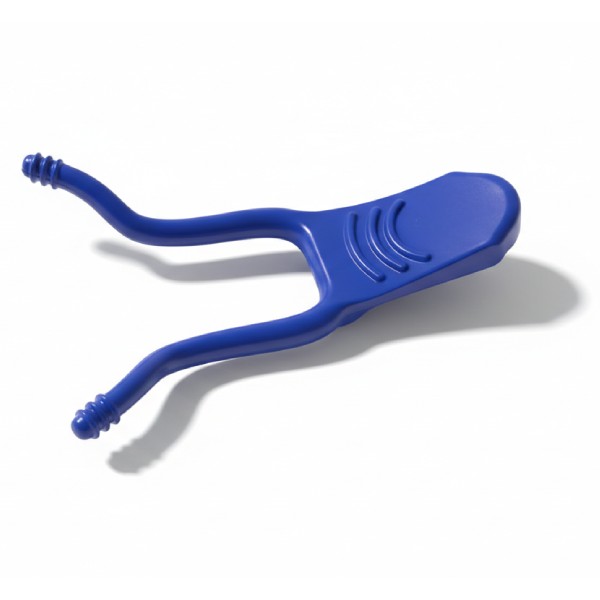
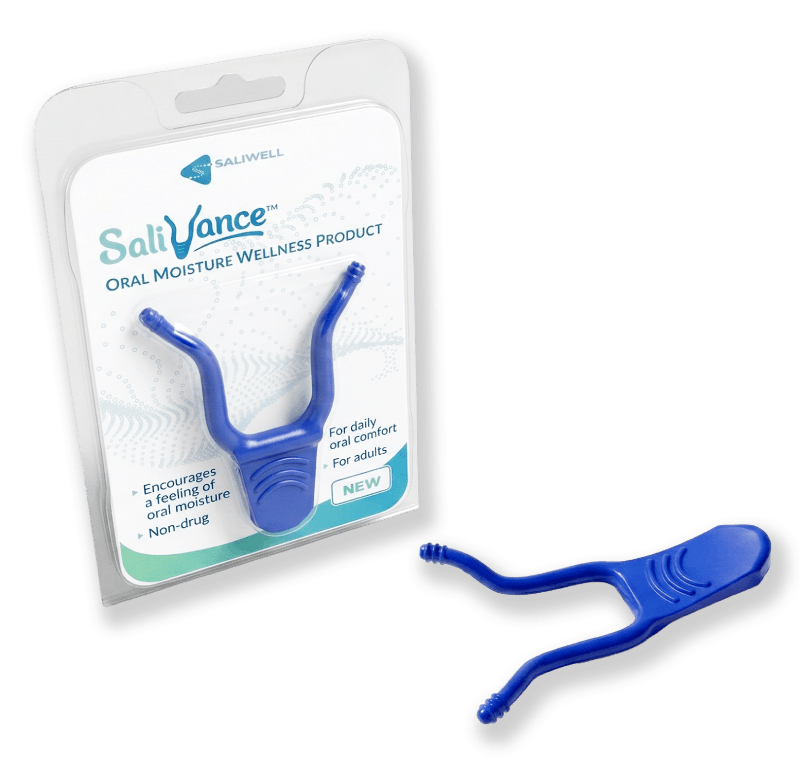
SaliVance is a soft intraoral wellness product worn comfortably inside the mouth as needed. Its shape provides gentle oral contact and naturally encourages tongue movement during use. By doing so, it supports the feeling of oral moisture and comfort.
The scientific research below provides explanations on the general principles of the relationship between oral moisture on one side, and foreign body sensation and tongue movement, on the other side.
The studies demonstrate generic benefits of mechanical stimulation and oral exercises.
What scientific research found about gentle mechanical stimulation
Some clinical trials of electronic dry mouth devices (like SaliPen) included a “sham” (nonactive) device. The sham looked and felt like the active device but delivered no electrical stimulation. This allowed researchers to observe what happened due to the physical presence and contact of the device alone without any other stimulation.
One month of mechanical contact
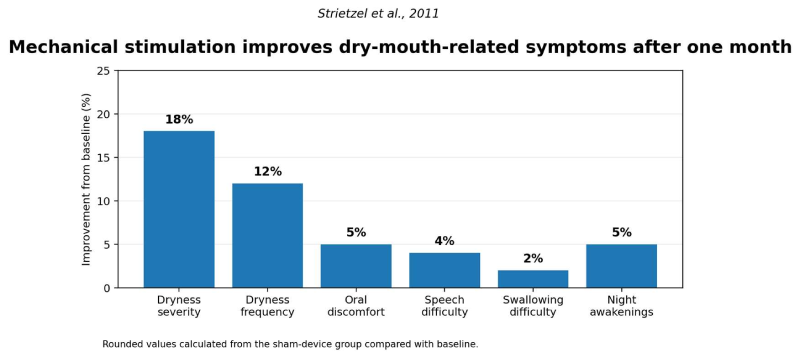
In the multicenter study by Strietzel and colleagues, participants used the sham device for a few minutes a day. The figure below shows the reported improvements across several dry mouth-related symptoms after one month, namely sensation of oral dryness severity and frequency, oral discomfort, difficulties in speech and swallowing, and night awakenings
What this means
The results suggest that the physical presence of an intraoral foreign object may itself result in the reduction of the severity and daily frequency of the sensation of oral dryness and of night awakenings and in the improvement of oral comfort, speech quality, and swallowing ease.
Mechanical stimulation over 12 weeks
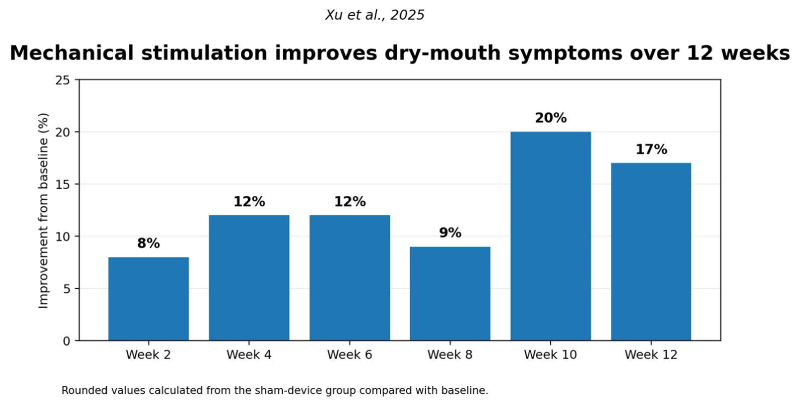
A later randomized trial by Xu and colleagues again included a sham device with no electrical stimulation that participants used for a few minutes each day. Participants showed improvement from baseline at every measured point from Week 2 through Week 12, peaking towards the end of the trial.
What this means
The benefit seen with mechanical contact was not limited to the first few days. In this study, improvement continued to be observed over a 12-week period.
What the evidence shows on mechanical stimulation
These findings support the general concept that ongoing tactile stimulation inside the mouth can improve oral comfort and functions by reducing oral dryness.
What research found about tongue movement
The tongue is the most active structure in the mouth. Moving it stretches and presses the surrounding tissues and provides repeated sensory input. Researchers have therefore studied whether simple oral and tongue exercises can support salivation and oral function.
Immediate change after oral exercises
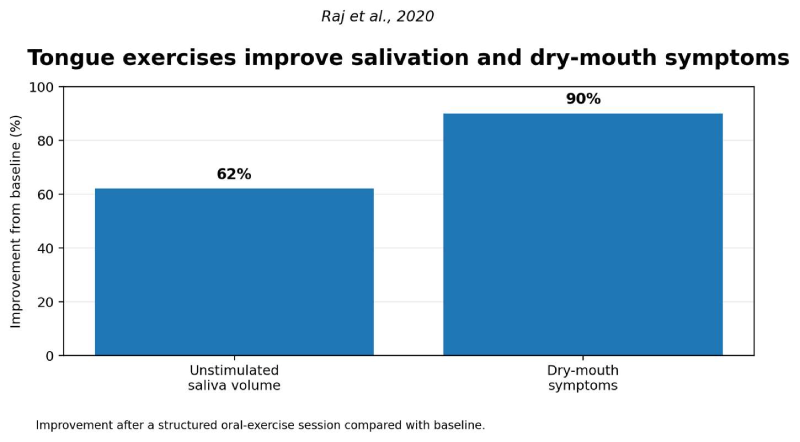
In the study by Raj and colleagues, one structured oral exercise session was associated with a 62% increase in unstimulated saliva volume and a 90% improvement in reported dry mouth symptoms among participants with low baseline salivation.
What this means
Even a brief period of structured oral movement may produce a measurable short-term response in people with poor salivation.
Daily tongue exercises for one week
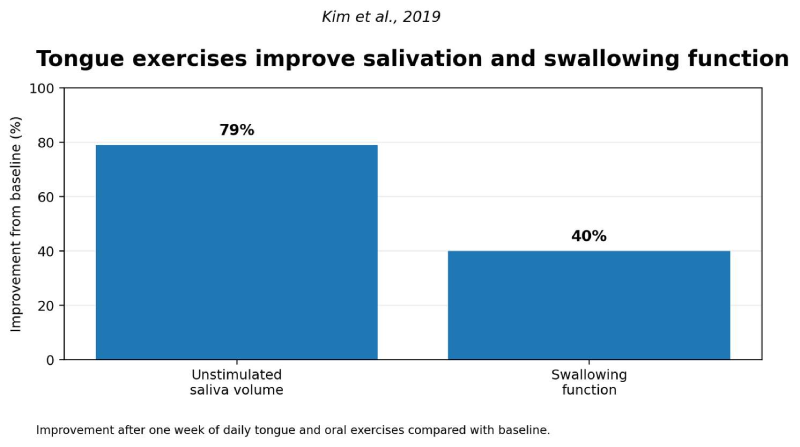
Kim and colleagues studied simple daily oral exercises in older adults. Among participants who began with poor salivation, unstimulated saliva volume increased by 79%. Among those who began with poor swallowing function, swallowing improved by 40%.
What this means
Repeated tongue and oral movement supports both salivation and everyday oral function, especially in people with poorer salivation function.
What the evidence shows on tongue exercises
These findings support the general concept that tongue exercises can improve oral comfort and functions by reducing oral dryness.
Putting the science into practical perspective
Taken together, the published studies show that two simple forms of stimulation can influence salivation and dry mouth-related symptoms:
- Gentle mechanical contact from an intraoral appliance
- Active movement of the tongue and other oral structures
Why SaliVance?
- Intended to support a feeling of oral moisture and comfort
- Soft, comfortable, high-grade silicone-based
- No drugs and no electronic components
- Designed to provide gentle intraoral contact and to naturally encourage tongue movement
- Reusable, suitable for everyday wellness routines, and affordable
References
- Strietzel FP, et al. Efficacy and safety of an intraoral electrostimulation device for xerostomia relief: a multicenter, randomized trial. Arthritis Rheum. 2011;63:180-190.
- Kim HJ, et al. Improvements in oral functions of elderly after simple oral exercise. Clin Interv Aging. 2019;14:915-924.
- Raj BT, et al. Effectiveness of oral exercise on oral function among the elderly. J Family Med Prim Care. 2020;9:1896-1903.
- Xu Y, et al. Effect of electrical stimulation of lingual nerve on xerostomia: a randomized controlled trial. JDR Clin Trans Res. 2025;10:282-293.